

Drive through Greenside, Parkview, Saxonwold or Melville and you’ll pass street after street of houses built long before the 1960s. Their steel windows, pressed ceilings and wide stoeps are a big part of why people buy there.
They also come with a rule that many homeowners only hear about once the builders are on site. If you’re planning a home renovation in Johannesburg and the house is more than 60 years old, you need a heritage permit before you change it.
What the 60-year rule says
Section 34 of the National Heritage Resources Act (Act 25 of 1999) says you need a permit before you alter or demolish any structure, or part of a structure, older than 60 years. In Gauteng, permits are issued by the Provincial Heritage Resources Authority Gauteng, known as PHRA-G.
A few things that catch people out:
- The house doesn’t need to be a declared heritage site. Age alone triggers the rule.
- It covers part of a structure too, so an old outbuilding, garage or boundary wall can count.
- Interior work can need a permit, not only changes to the façade.
- Earlier alterations don’t reset the clock.
Because the 60 years roll forward every year, houses built in the mid-1960s are coming under the rule now. Heritage groups in Johannesburg have pointed out that a large share of the city’s buildings are reaching that age.
Heritage permit and council approval: you need both
The heritage permit doesn’t replace building plan approval. You’ll still need your plans approved by the City of Johannesburg, and in some suburbs the residents’ association has a heritage committee that wants to see your plans before they go to PHRA-G. We’ve explained the council side in Do You Need Building Plans to Renovate in Johannesburg?
We’re designers, not lawyers, and how the rules are applied can change. Confirm the details for your property with PHRA-G or a heritage practitioner before you commit to a design.
A heritage home renovation in Greenside
House van Zyl is a heritage “railway” house in Greenside that needed a total overhaul. The brief was to bring it up to date for modern living while respecting the character of the original home.
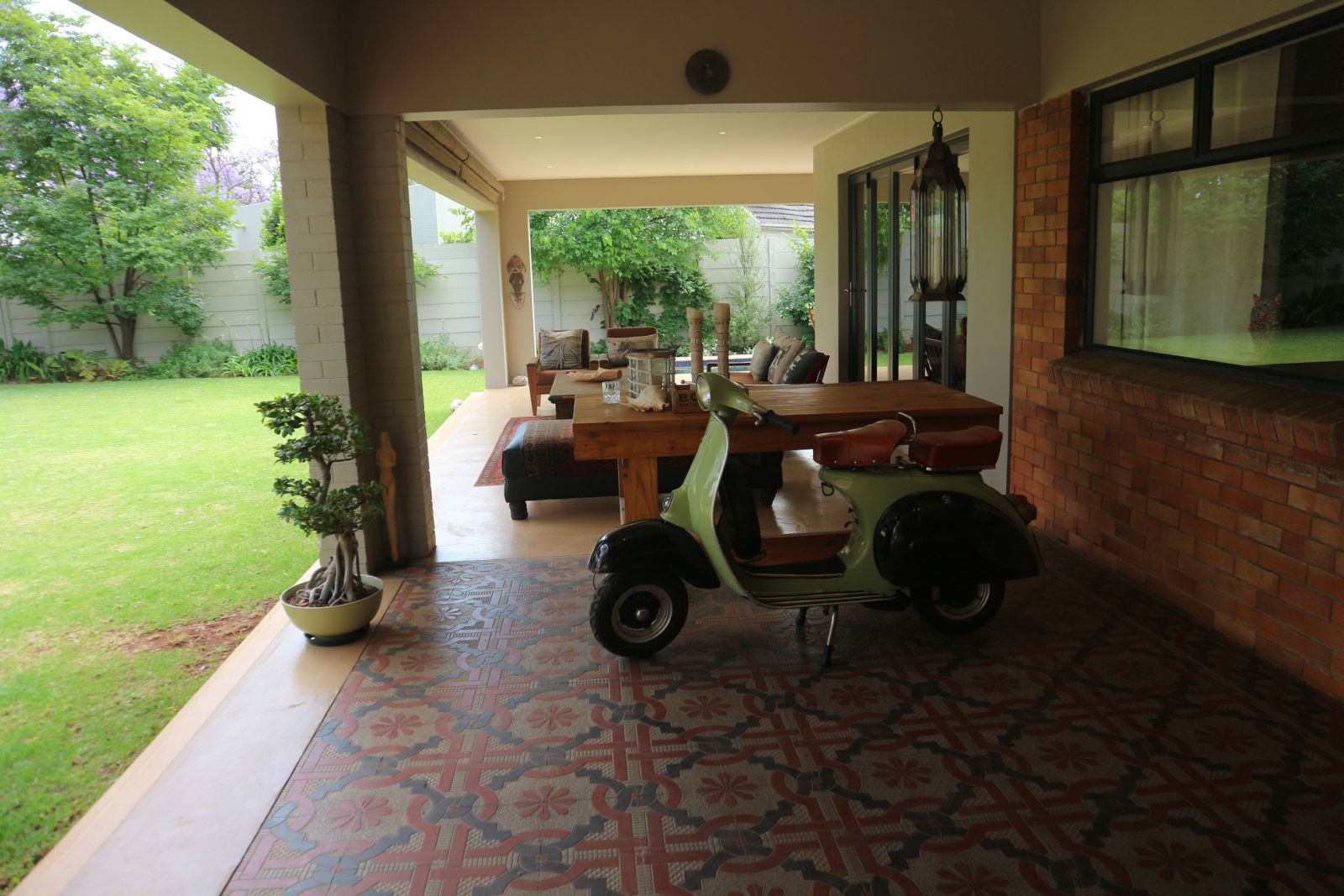
The biggest change was outside. We designed a covered patio that wraps around the entire house and opens into the lounge, dining room and media room, so the house now lives indoors and out. On the patio we used patterned floor tiles, face brick and timber, materials that suit the age of the house instead of fighting it.
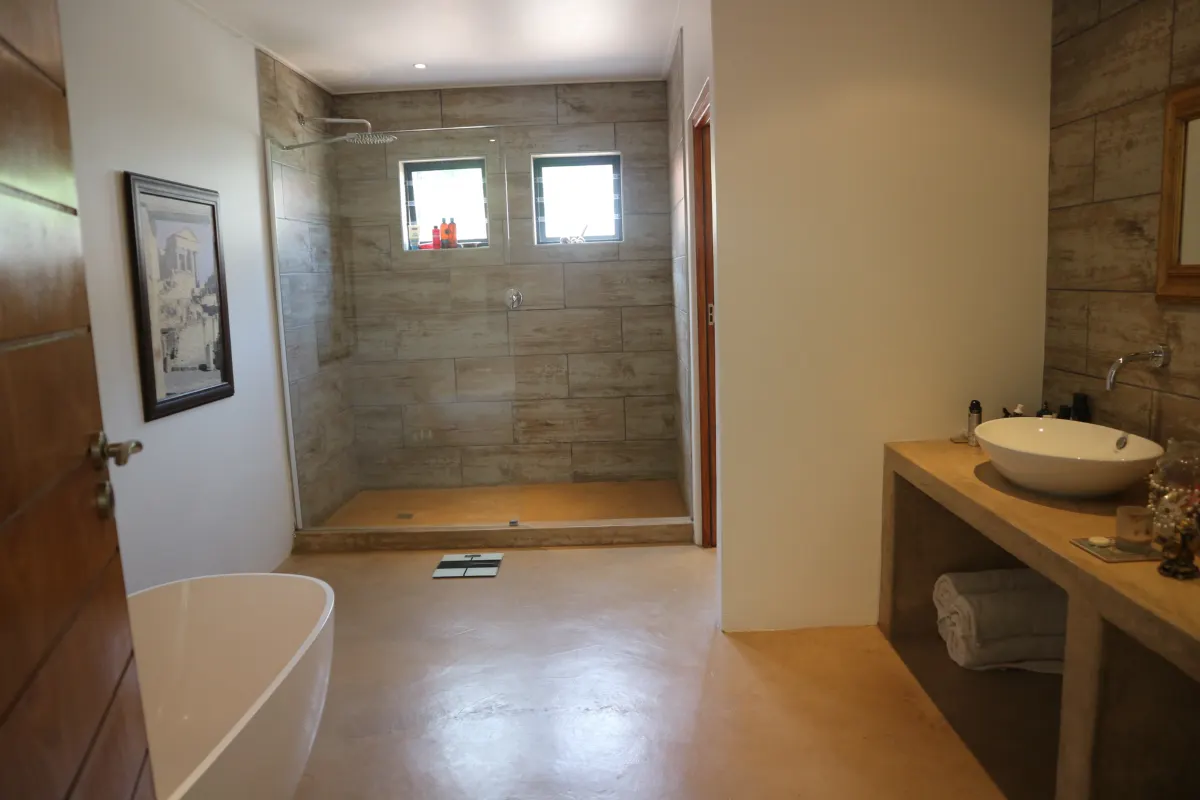
Inside, the bedrooms were refreshed with light finishes and natural light. The bathroom got a freestanding bath, a walk-in shower with stone-look tiles and a vessel basin on a timber vanity. It’s a modern bathroom, but nothing in it looks out of place in an older house.
There are more photos on the House van Zyl project page.
Old buildings, new uses
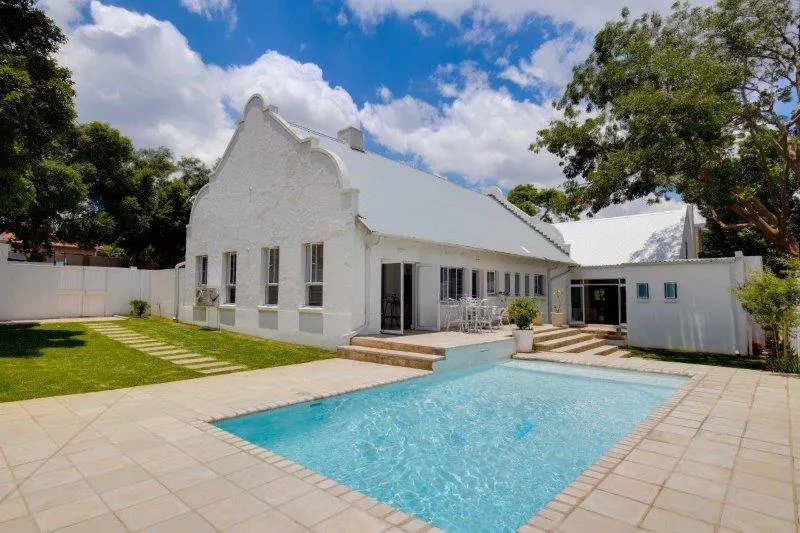
The same thinking works for commercial property. G&G Digital’s offices in Highlands North are in a heritage Cape Dutch house. We drew up the plans and took them through the heritage and council submissions, including a physical inspection of the property by the heritage committee. The white Cape Dutch gables stayed. Behind them there’s now a double-volume wing with a mezzanine office under the pitched roof. See the G&G Digital project.
Tips for renovating an old house in Johannesburg
- Find out how old it is. Old building plans or a heritage practitioner can help date the house and any later additions.
- Decide what’s worth keeping. Original floors, pressed ceilings, fireplaces and steel windows are usually the things you can’t buy new.
- Make the new parts look new. An addition that’s clearly modern but sits comfortably beside the original often works better than a copy of the old style.
- Allow time for two approvals. PHRA-G and the City of Johannesburg each have their own process.
- Keep a contingency in the budget. Older houses hide things: tired wiring, damp, plumbing that’s been patched for decades.
Planning a home renovation?
Have a look at our home renovation service, or get in touch and tell us about the house. We’re interior designers based in Norwood and work on homes across Johannesburg and Gauteng, from Greenside and Saxonwold to Benoni.
